The mistake we see again and again: they take the TV spot, crop it vertical, upload it and wonder why nobody watched.
TikTok does not work like television, nor like Facebook in 2015. It mostly does not show you videos from accounts you follow; it shows you whatever it thinks you will watch to the end. That is good news for a small business: a video from an account with few followers can reach thousands of people if it holds their attention. It is also bad news: budget does not buy attention. You earn it.
The first two seconds
You have no intro. You have no logo at the start. You have two seconds to give a reason not to scroll. The reason is almost always one of three: something unexpected, something that concerns them directly, or something that promises an answer to a question they have.
In practice: start in the middle of the story. Not "Hello, we are store X", but straight to the result, the before and after, the mistake everyone makes. Put the key message on screen as text too, because many people watch without sound.
What content works for businesses
- Behind the counter: how the product is made, how an order is packed, how an arrangement comes together. People want to see the work, not the ad.
- Answers to real questions: whatever customers ask you on the phone or in the shop is a ready-made script.
- Before and after: a space, a make-up look, a website. The comparison keeps viewers to the end.
- Faces: someone from the business speaking naturally to camera builds trust no graphic can.
You do not need a studio. You need good light, clean sound and a phone on a steady stand. Over-produced video often looks like an ad, and ads get skipped.
What drives reach, in order of weight
- Completion. Better fifteen seconds watched to the end than forty abandoned at ten.
- Comments. A question at the end is worth more than a call to buy.
- Consistency. Three videos a week for two months beat ten in one week and then silence.
When to pay
Do not boost a video that did not do well organically; money will not fix it. Boost what already holds people, aiming at visits or orders, not views. Views are the cheapest thing you can buy and the least useful.
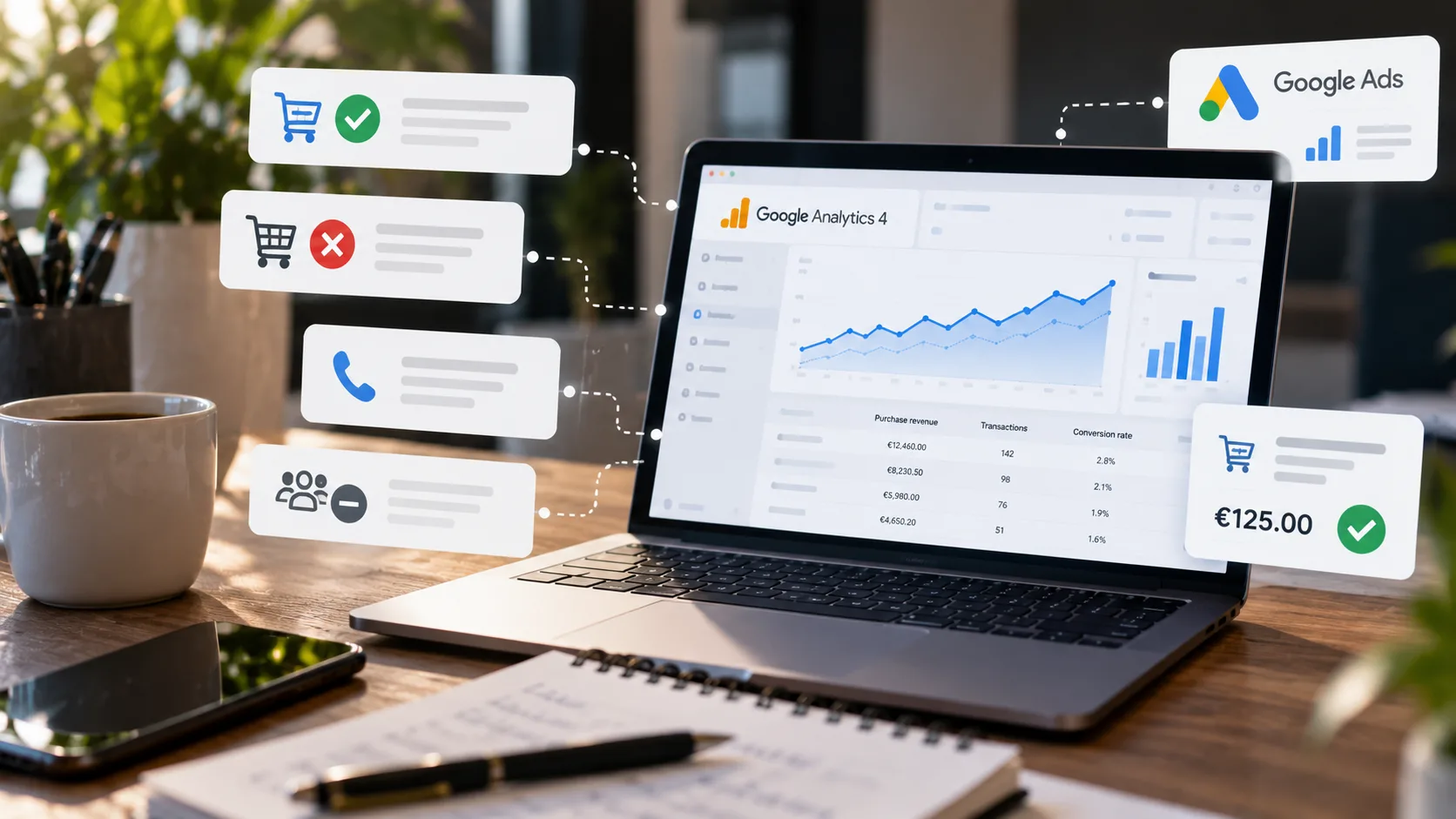
For more structured campaigns there is TikTok Ads Manager. There you can promote a video that already worked on your account (Spark Ads), keeping its likes and comments, which usually performs better than a video shot specifically as an ad. To know whether ads bring orders, you need the TikTok Pixel on the site, set up with cookie consent, following the same logic as tracking in Google Ads.
What to measure
Not likes. Completions, profile visits, link clicks and, if you sell, cost per order. If it does not connect to orders, it is a PR exercise, which may be worth it, as long as you know that.
And make sure the link leads somewhere that loads fast on mobile. The TikTok viewer is on a phone, thumb ready to go back. A slow landing page ruins even the best video.
A plan for the first two months
- Weeks 1–2: ten ideas from real customer questions, three videos a week, no ads.
- Weeks 3–6: keep whatever had good completion, make variations of it, stop what did not work.
- Weeks 7–8: boost the best two or three videos with a small budget, aiming at visits or orders, and measure the cost per result.
If you want help
We take on both the content and the ads: video production for vertical videos that do not look like spots, and campaigns on Google, TikTok and Meta with proper tracking. For how a TikTok agency presents itself, see the site we built for Katheto. Or simply tell us what you sell and to whom.
Frequently asked questions
Is TikTok worth it if my customers are not teenagers?
Often, yes. TikTok's audience has grown well beyond teenagers, and the algorithm shows videos to whoever is interested in the topic, regardless of age. The criterion is whether your work shows well on video, not your customers' age.
How often should I post?
As often as you can sustain for months. For most businesses, two to three videos a week is a realistic target that gives enough data to learn what works.
Do I need professional equipment?
Not to start. A recent phone, light from a window or a simple lamp, and a clip-on microphone are enough. Professional production is worth it for ads and for videos that will be used across many channels.
Should I start with ads or organically?
Organically. The first videos tell you, for free, which content holds people. Ads then amplify what already works, instead of paying to find out.