
You have set up your online store, you post a nice product photo on Facebook or Instagram, you tap the blue "Boost post" button and wait for sales. A few likes come in, no comments, a handful of clicks. Sales? Few or none. And worse, you have no idea whether the money you spent on advertising brought anything back. If this sounds familiar, it is not your fault. It is the method. Boost is not built to sell. Below you will see why a simple boost does not bring sales to an eshop, what the right way to advertise your store is, and exactly what we do to turn every euro of budget into measurable return.
What "Boost" is, and why it does not sell for an eshop
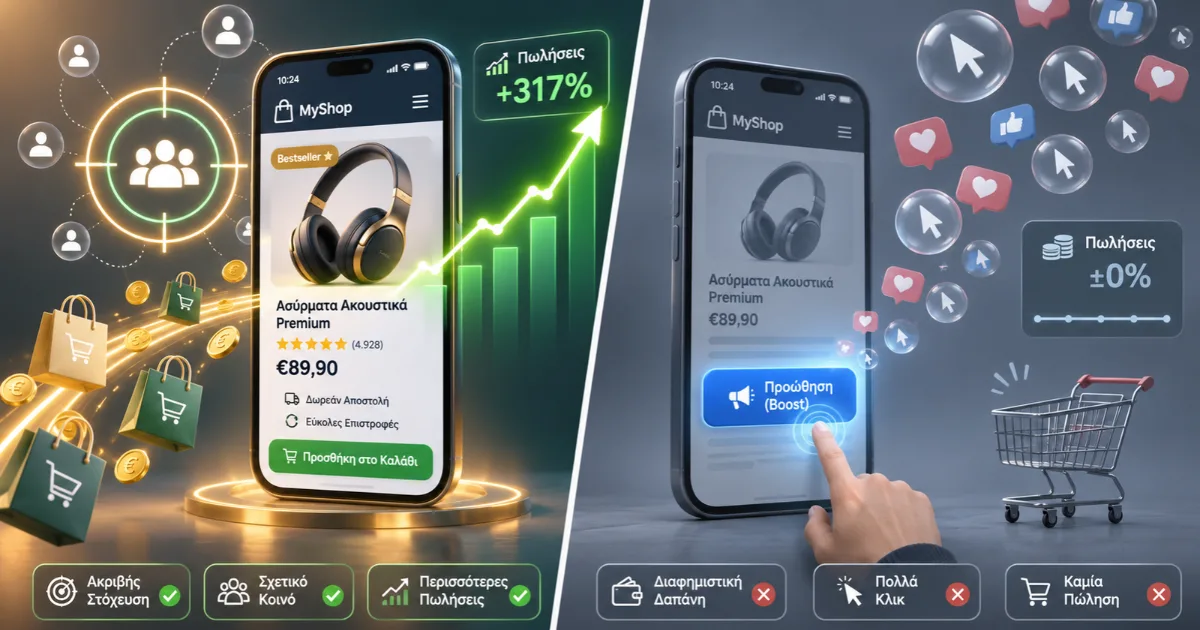
"Boost post" is the easy button on Facebook and Instagram: you pick a post, set an amount, and Meta shows it to more people. It sounds reasonable, but for an online store that wants sales it has three serious problems.
1. It optimizes for the wrong goal. Boost chases interactions (likes, comments, clicks), not purchases. Meta's algorithm will find people who like easily, not people who take out their card and complete an order.
2. It shows to the wrong audience. A simple boost mainly targets your existing followers and a "similar" audience based on engagement. It does not look for buyers with purchase intent at the moment they decide.
3. It is not measurable. You do not know how many sales it brought, which product, at what cost per purchase. You see reach and clicks, but you pay blind.
The result: you spend budget on traffic that looks good in the stats but leaves no money in the till.
Clicks are not sales
The biggest trap in advertising an eshop is measuring the wrong things. Reach, impressions and clicks are vanity metrics: they rise easily and make you feel something is working. The only measurement that matters for a store is how many orders came in and at what cost. A thousand clicks with no sale is not success, it is wasted budget. A campaign with fewer clicks but ten orders is gold. Advertising an eshop is not "show the product to more people", it is "find the people ready to buy and measure every euro".
The right way to advertise your online store
Proper eshop advertising on Facebook, Instagram and Google rests on a few foundations the "Boost" button ignores completely.
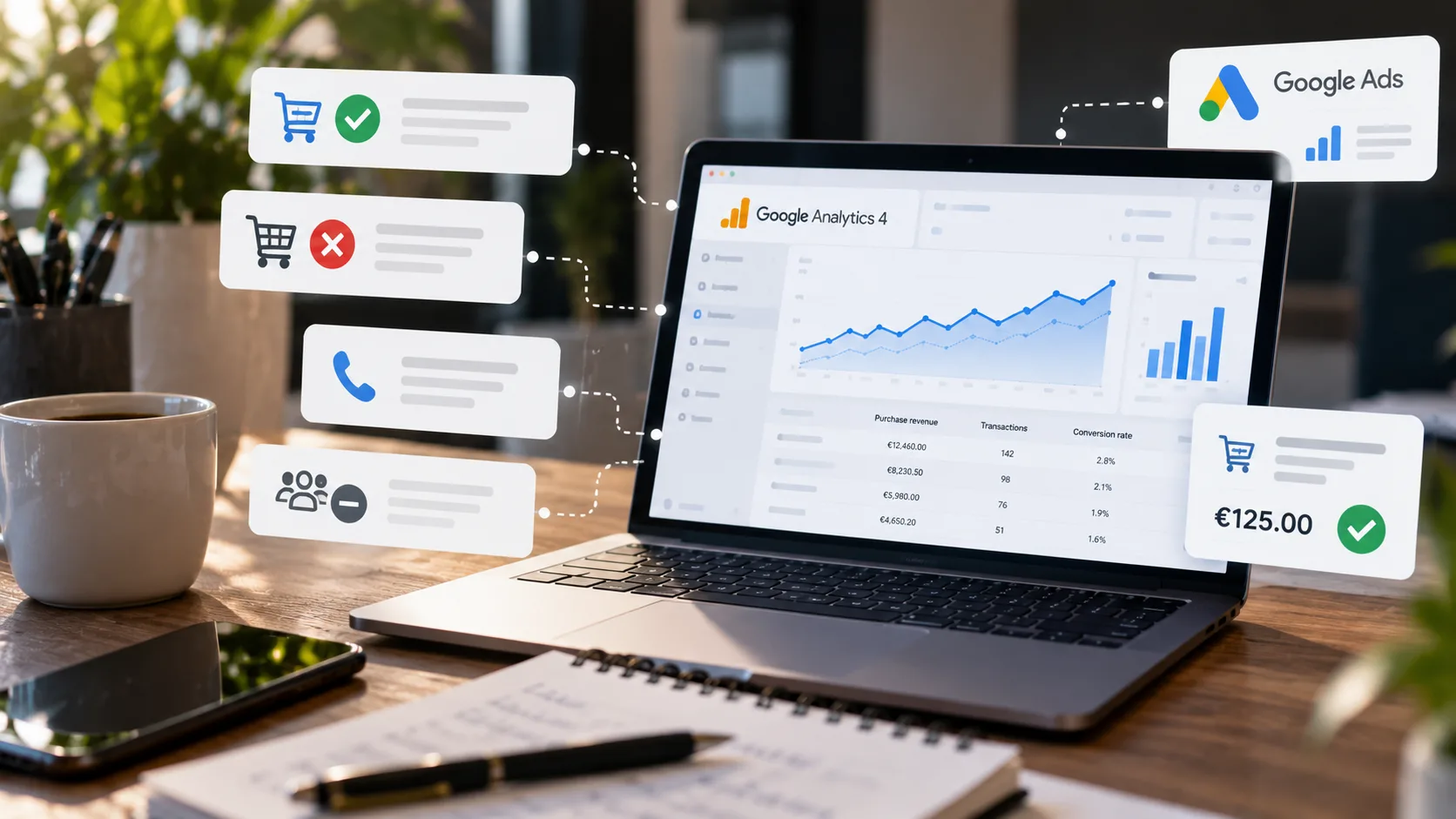
Measurement first. Before you spend a euro, the Meta Pixel and the Conversions API are set up correctly on the store, so Meta can "see" product views, add-to-carts and, above all, completed purchases. Without proper measurement every campaign is blind and the algorithm cannot learn who buys.
Sales as the goal, not engagement. You run a campaign with a "Sales / Conversions" objective and tell Meta "bring me purchases". The algorithm then optimizes toward people who actually complete an order, not toward likes.
A real funnel: prospecting and retargeting. Part of the budget goes to new audiences who do not know you (prospecting), based on interests and audiences that resemble your buyers. Another part targets those who already viewed a product or left a full cart without buying (retargeting). Abandoned carts are usually where the cheapest sales hide.
A product catalogue (Advantage+ / Shopping). You upload the store catalogue and Meta automatically shows the right product to the right person, even the one they just looked at.
Google Ads alongside Meta. To catch people actively searching to buy, Google Ads for eshops (Performance Max and Shopping with a product feed) puts your products in front of them at the moment of the search.
Creative that sells, tested continuously. Videos and images built to sell (product, price, benefit, a clear call to action), tested constantly so only what performs stays.
How much does advertising an eshop cost
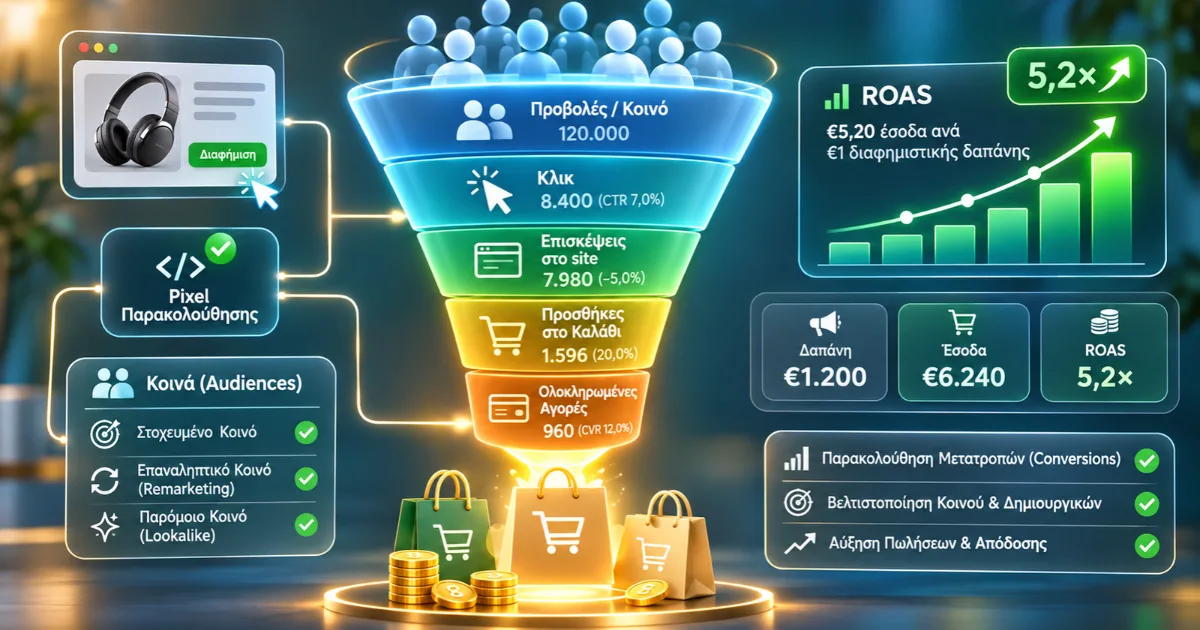
The most common question is "how much does advertising an eshop cost". The truth is that the size of the budget matters less than you think. What matters is the return per euro, the so-called ROAS (return on ad spend). A campaign at 10 euros a day that returns 4 euros in sales for every 1 euro of ad spend is worth more than a campaign at 100 euros a day that does not cover its cost. The right approach is to start with a sensible budget, let the algorithm learn, measure the cost per purchase, and then scale the budget where it already performs. That is how ad cost stops being an expense and becomes an investment with measurable return.
What exactly we do
At Adamit we do not press "Boost". We set up an advertising system that measures and delivers:
- We set up tracking correctly. Meta Pixel, Conversions API and Google tracking on your store, so every purchase is recorded and attributed to the right ad.
- We build structured, sales-focused campaigns. Prospecting for new audiences and retargeting for carts and visitors who did not complete an order.
- We connect your product catalogue. Advantage+ and Shopping, so the right product is shown automatically to the right person.
- We prepare creative that sells. And test it continuously, keeping whatever brings results.
- We measure and optimize every week. ROAS, cost per purchase, which products and audiences perform, what to cut and what to scale.
- We give you a clear picture. What you spent, what you sold, what every euro returned. No reach and impressions that mean nothing.
Conclusion
Boost is easy, but it brings clicks, not sales. An online store needs advertising with proper measurement, a sales objective and continuous optimization. That is the difference between "spending on ads" and "investing in ads". Do you have an eshop and want advertising that delivers? Request an audit of your advertising and see what your budget can really bring.