Online fraud is nothing new. What changed is how convincing it became. With AI tools, a scammer can spin up a fake store that looks like yours in a day, fake a statement by a known figure, and run ads that look legitimate. Here is what is happening right now, how you protect yourself as a shopper, and how you defend your brand when someone uses your name.
What we are seeing right now
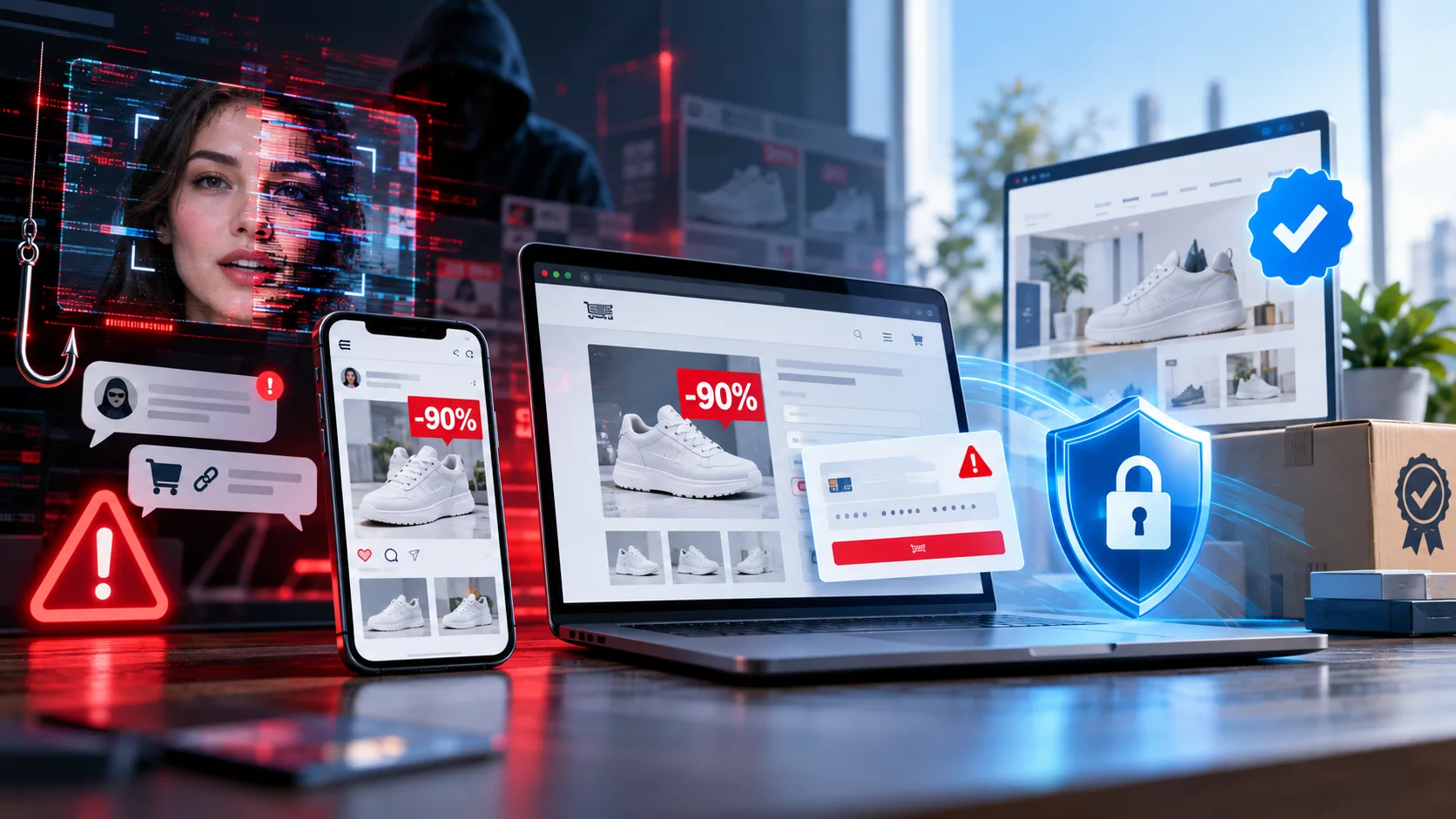
Authorities have issued repeated warnings. The Greek Police point to a wave of "sponsored" social media ads, often with deepfake videos of known figures, promoting fake investment schemes or miracle products. The Cybercrime Division also reports an explosion of SMS messages (smishing) with malicious links impersonating banks and courier companies, plus fake pages borrowing the logos of well-known services. The common thread is urgency: an offer that expires in minutes, a parcel that is "stuck", an account that will "close". The goal is to make you click before you think.
How to protect yourself as a shopper
- No bank or public service asks for passwords, PINs or one-time codes over SMS, email or phone. If they do, it is a scam.
- Do not click links inside messages. Open the service by typing the address yourself or through the official app.
- Check the address letter by letter. A variant like
brand-gr-sale.shopis notbrand.gr. - Turn on two-factor authentication everywhere and use unique passwords with a password manager.
- For purchases from unknown stores, prefer a low-limit or prepaid card.
- If an offer is too good to be true, it usually is not true.
If you already shared details or paid: call your bank immediately to block the card or transaction, change the passwords you revealed, keep screenshots and URLs, and report it to the Cybercrime Division. Useful official resources are cyberalert.gr and the dedicated section on astynomia.gr.
How someone copies your brand with 90% off ads
If you run a store, there is a second risk that does not target you directly but your customers. The scammer copies your logo, photos and name, sets up a fake store, and runs sponsored Facebook and Instagram ads with discounts of 80 to 90 percent, often through hijacked accounts so they look authentic. The customer either pays and never receives anything, gets a counterfeit, or, worst case, leaves their card details on a fake checkout. The damage is double: the customer loses money and you lose the trust you built, through no fault of your own.
How to defend your business
You cannot remove the risk, but you can cut it down sharply. Monitor your name combined with words like "sale" or "outlet", check Meta's ad library for impersonating ads, and watch for newly registered look-alike domains. Report fakes with evidence; platforms remove them within one to three days, faster if you hold a registered trademark. Get a verified business account, register your trademark, and buy the obvious look-alike domains. Most of all, tell your customers which channels are official and that your offers exist only there, because fake ads almost never appear on a brand's official pages.